Separation Conflicts in GHK: Understanding Skin Symptoms Through the Lens of the Epidermis
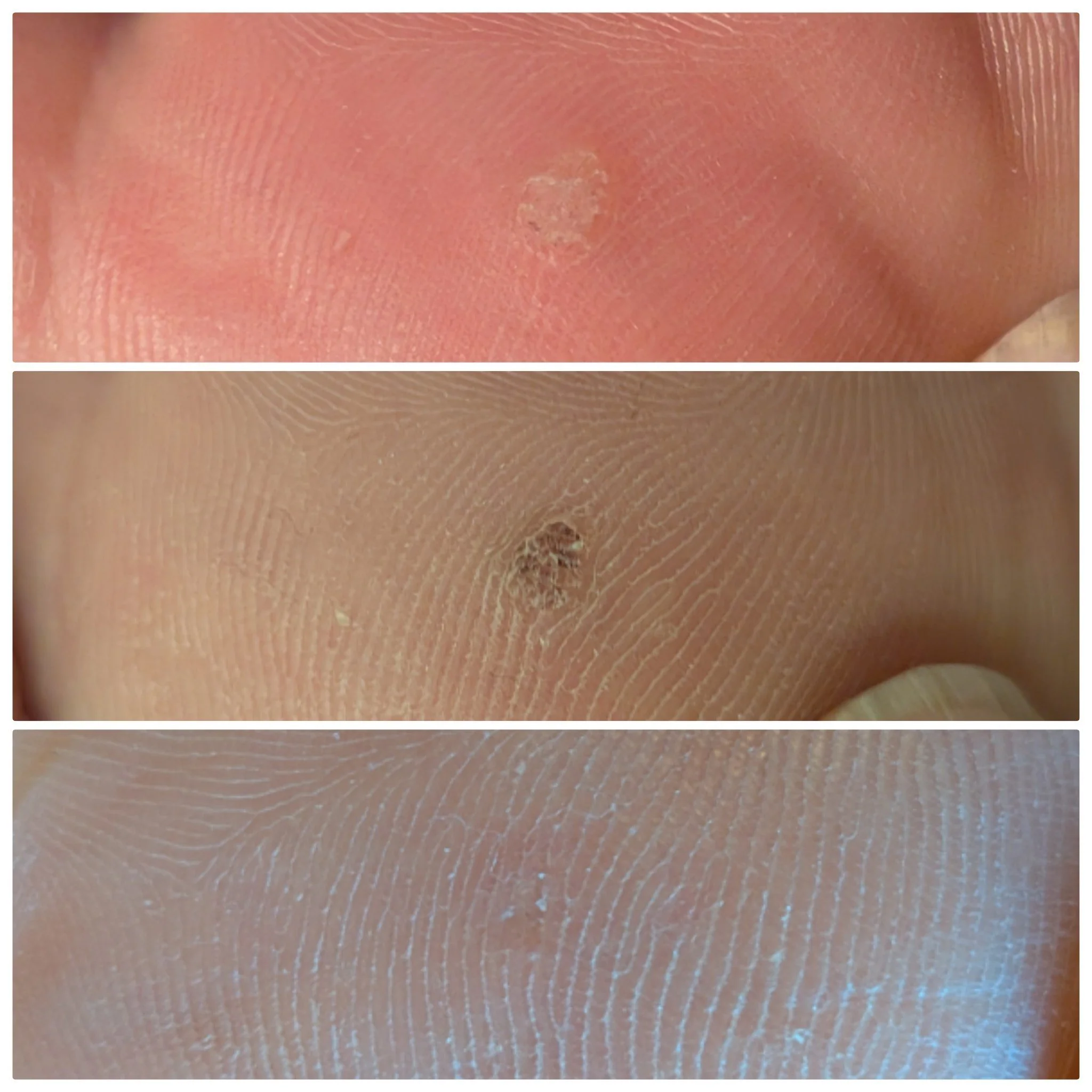
Plantar wart in healing
In Germanic Healing Knowledge (GHK), separation conflicts are one of the most common emotional shocks the body responds to. They arise when a person experiences an unexpected interruption or loss of physical or emotional contact.
This can be felt as:
“I was torn away.”
“I can’t reach them.”
“I’m not allowed to touch them.”
“They pulled away from me.”
“I want this person off me.”
The key theme is always about contact — either wanting more of it or wanting less.
The epidermis, which originates from the ectoderm and is controlled by the sensory cortex, is the organ system that expresses this conflict biologically.
What is a Separation Conflict?
A separation conflict occurs when:
a child is suddenly separated from a parent
a partner unexpectedly leaves
a breakup or emotional withdrawal happens
someone dies
a mother returns to work
a person is hospitalized or isolated
a relationship ruptures
someone is rejected or pushed away
someone wants to separate from an overwhelming or abusive person
It can also be localized:
wanting someone’s hands off you
missing the touch of someone’s hands
wanting to pull away from shoes, socks, tight clothing
wanting to leave a physical place or not wanting to leave it
The psyche maps these experiences to the exact area of skin where the conflict is felt.
How the Epidermis Responds Biologically
Conflict-active phase
microscopic ulceration
numbness, dryness, flaking
pale, cool skin
decreased sensitivity
sometimes complete numbness
This often goes unnoticed.
Healing phase (PCL)
redness
swelling
blisters
itching
rashes (eczema, dermatitis, hives, etc.)
oversensitivity
warmth
These symptoms are the repair, not the disease.
This is the core logic of all ectodermal separation programs.
Where Plantar Warts Fit: A Deeper-Layer Separation Conflict
Plantar warts provide a unique, specific example of a deep-layer epidermal separation conflict.
They originate in the deep basal layer of the epidermis — still ectoderm — and therefore follow the separation conflict logic.
But the theme is symbolic and specific:
A separation conflict involving the ground or the place one stands.
This may be experienced as:
“I don’t want to be here.”
“I want to separate from this place.”
“I’m stuck and can’t move away.”
“I want these shoes off my feet.”
“I want to leave but I can’t.”
“I don’t want to leave this place/home.”
“My footing in life feels threatened.”
“I feel walked on / stepped on / held down.”
Pressure points on the foot often reveal:
the exact track
the exact location of the emotional experience
the precise meaning of the separation
This is why plantar warts also appear in:
unwanted moves
forced relocations
job changes
moving away from home
not wanting to leave a sports team, community, or country
walking on a job site one hates
wearing boots or shoes one wants off
The foot is our symbolic interface with:
direction
stability
grounding
belonging
movement in life
the places we stand
So plantar warts tell a very literal story:
A separation conflict involving where you stand — physically or emotionally.
Why Plantar Warts Can Become Chronic
A plantar wart that persists or recurs indicates a hanging healing:
the conflict was only partially resolved
the person continues encountering tracks (shoes, workplace, home environment, movement patterns, the same ground)
the healing keeps restarting
So the wart is not the problem.
It is the solution the body keeps returning to because the conflict remains emotionally active.
Putting It All Together
The epidermis responds to separation conflicts.
These conflicts are always about loss or longing of touch/contact — or wanting to push something/someone away.
Plantar warts are a specific subtype involving separation from the ground or place one stands.
The wart is the healing phase.
Chronic warts indicate tracks and hanging healings, not infection.
Separation conflicts tell a deeply personal story about attachment, belonging, place, and connection.
Plantar warts simply reveal where — and how — that story was held in the body.
Your biology is not attacking you.
It is expressing your lived emotional reality with precision and purpose.
